Hierarchies

‘Hierarchies’ is not an easy word to spell, and it’s one of the words insisted upon by autocorrect systems when trying to write other things. Here in, herein, heroine, here in the -
- here in the underground train everyone is using their phones, except for pairs of women speaking to each other in languages from countries other than this one: German, Kurdish, Mandarin. Everyone is wearing shoes, boots, sandals or clogs. Some have baseball caps. Many have headphones. Perhaps they too are listening to podcasts about mental health (it turns out that famous or successful people have mental health problems too, but nowadays they can learn from them, fully recover and benefit their careers in the process, become more ‘rounded people’ and possibly publish books about the subject), or about medieval Germany (it turns out that Charlemagne’s ‘Europe’ persists until today, although it has experienced some ‘bumps in the road’ - roads built by the Romans), or about European football (it turns out that balancing domestic and continental campaigns is tricky for all but the wealthiest clubs).
Here in the night train it is still day, and the men who will occupy the eventual six bunks are packed onto the two bottom bunks, which function as conventional train seats until a collective decision is made to convert the compartment into a tiny dormitory. Everyone still has their shoes on, and everyone is wearing jeans ranging from dark to light.
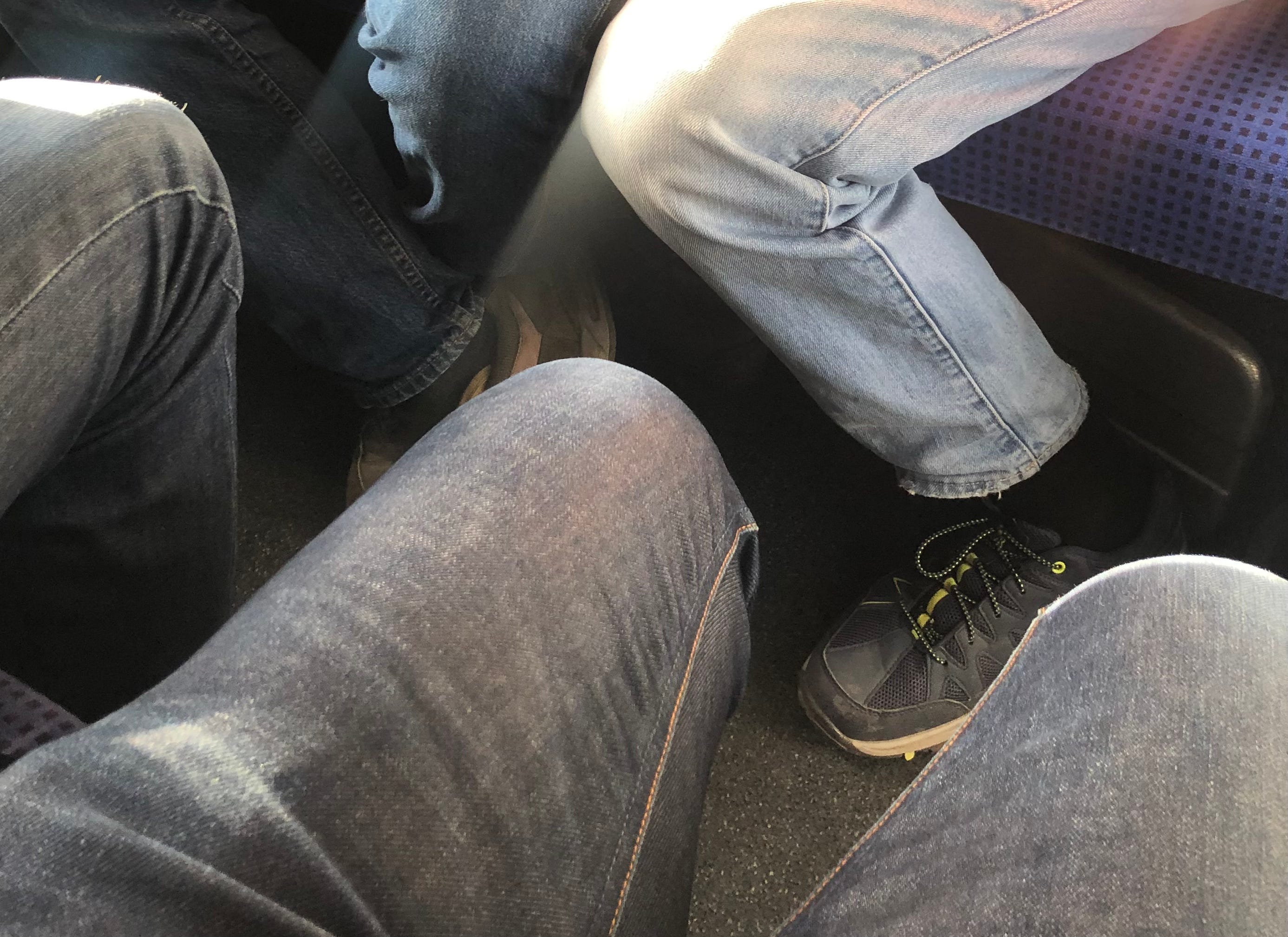
The sun is streaming in. Three of the six men are using laptops, three are using telephones. There is, once everyone has settled in and our tickets have been checked, an amiable silence. After initial forays into telephones and laptops a lattice of charging cables had to be created. Everyone needed more power.
While the French writer continues to to compose his Stories, it is notable that the book he recently published positions itself - and by extension him - against the role of the raconteur. Rather than being a ‘story’ it beautifully records the wavering of a consciousness, the tuning in and out of a mind. A scrap of paper, a bookmark in fact, bears of list of words in the book that had to be looked up while reading. These words were either puzzling vocabulary omissions or words long forgotten due to a lack of use. It can be strange to (more or less) know a language but exist far from its culture, and to very rarely use it.
Lierre: During middle age the windows of the consciousness become covered in ivy. During the Middle Ages manuscripts were often illustrated with depictions of ivy, growing around the text.
Moineaux: The covering of ivy means that the sparrows outside can be heard but not seen.
Berlines: Many middle aged men drive the kind of cars known as ‘sedans’ in America and ‘hatchbacks’ in Britain. Practical, comfortable, spacious and sometimes discreetly luxurious, with plenty of space for children, sports equipment and shopping; ideal for full integration into a society of consumption. After the fall of the Berlin Wall, East Germany was flooded with secondhand hatchback cars from the West, to the enormous profit of West Germans.
Bourgeons: The train is travelling south to normal countries, to places where spring is truly taking place, and where the risk of snow and ice is over.
Peuplier: There won’t be any Poplar trees until tomorrow, when we approach the Oder-Meisse line.
Manne. Certain trees trees exude providential nectars. The train has now passed the zone of pine forests into farmland, where the trees are sparse but bountiful, and every garden has at least one apple tree.
One of the men in the compartment looks exactly like Tadej Pogačar. But he cannot be Tadej Pogačar. Firstly, because Tadej Pogačar is presumably in Belgium, preparing to race in the Tour of Flanders. Secondly, because the man is clearly German, not Slovenian. He is travelling with another man, who would seem to be his father (floral patterned shirt, large watch, a book by Denis Marquet, the palest jeans in the compartment). Thirdly, because the man’s body is not that of a cyclist. Compared to most people he is in great shape, healthy and fit-looking. But compared to Tadej Pogačar he is overweight, lumpy and inefficient-seeming. It would be a scandal if Tadej Pogačar appeared like that. Fourthly, Tadej Pogačar would never travel in the second-class sleeping compartment of a night train. He is paid millions of euros each year, and he and his team are funded by the sovereign wealth of the United Arab Emirates. Yet, the man looks exactly like Tadej Pogačar. His face and hair are the same. His smile is the same. His friendly, boyish countenance is the same. His face is even sunburnt like a cyclist’s. His jeans are in the mid-range of the compartment’s blue spectrum.
One of the men ate a salad from a cylindrical cardboard container. He received a telephone call while eating the salad, and told his interlocutor that he was eating a salad. Later on he received a second telephone call and told his second interlocutor that he had eaten a salad. He told both that he was in a train. Now he is working on his laptop, preparing a PowerPoint presentation about ‘The Impact of Freight Trains on Passenger Train Punctuality’. This is a Passenger train, but it seems as if the man works for the other side, for Freight. Perhaps we will experience the impact of freight trains on passenger train punctuality during our journey, and it will have some effect on the discourse of his work, either empirically or subjectively.
Night trains have lavatory cubicles, just like other trains, but also have little washrooms. The washrooms have the same kind of taps and basins as the lavatories, but no actual lavatory. One of their primary uses appears to be for people to brush their teeth (many people go to and fro bearing toothbrushes and tubes of toothpaste), which raises one of the great questions of the modern era: is it okay to rinse one’s brush and mouth with water that is clearly indicated as ‘not drinking water’?
Are top bunks of a higher or lower status than bottom bunks? There are arguments for and against the superiority of both. These can be summarised as ‘access and proximity to the floor’, in defence of bottom bunks, and ‘the semblance of privacy’, in defence of top bunks. Middle bunks are a much stranger beast, neither one thing or the other, neither fish nor fowl, Weder Fleisch noch Fisch. Depending on the height of a given passenger, they may or may not even need to use the compartment’s ladder to access the middle bunks. Taller people can get onto them easily, perhaps using a high knee to accede to the bunk directly in a single movement. Small people may use the ladder provided, to compensate for their physical disadvantage. In this sense middle bunks represent the broad middle class that social democracy can build, given the right conditions. But do top bunks represent lofty and aristocratic isolation? Or do they represent the attic-dwellings of the servant class? And do bottom bunks represent the grounded mundanities of the land, of the peasant? Or do they represent the nimble, unrooted and class-defying life of the para-urban cosmopolitan? Or the uncertainty of the precariat? Hopefully, tomorrow morning, we six sleepers might debate these questions like the personae of Plato’s Republic, each of us speaking for our respective bunks. Socrates himself would mock the pretentious and false humility of the bottom bunk, but also mock the undignified contortions required to reach the ‘elevation’ of the top bunk. He would annoy and provoke his friends with his advocacy for the discomforts and compromises of the middle bunk. Polemarchus would say “But my friend, in the middle bunk one is bothered by every man in the city, high and low alike, and is never granted peace. What kind of life is that?”, to which Socrates would smugly retort that it is only in the half-sleep of the middle bunk that the full arc of justice can be perceived, only there that one may perceive the cyclical exchange of foul emanations rising up from below and arrogant impositions falling from above. Socrates’ friends, attached to their own privileges, are constantly exasperated. They just wish he would join them on either the top or bottom bunk, but he won’t. He will eventually drink a whole glass of non-potable water and lay down to die on the middle bunk, convinced he is right.
Night trains have the effect of making their passengers wake up in strange and different lands, like Scotland, Belgium, Italy, Austria or Germany. These lands can often be quite different to the places where the passengers began their journey, with surprising landscapes or cultures.
During the interwar years the Greek railway system pioneered the use of ‘symposium carriages’ on night trains, which had no beds but provided unlimited quantities of coffee.
Instagram sends an email to say that eight friends have posted Stories, and that they should be seen before they disappear.
Here on the unsocratic top bunk one can listen to stories about Charles Darwin, Donald Trump, Jack Leach, and Henry, Duke of Saxony.
Enlivened by an incredibly good night’s sleep, the man writing a report on the impact of freight trains on passenger train punctuality is keen to talk. He will travel onwards to Dresden, and we discuss the decimation of so many German cities by the British air force’s brutal bombing campaign, and which cities were most decimated by it. Yet he was strangely uninterested to hear about The Tower by Uwe Tellkamp. He seems to be most interested in logistics, and Tellkamp’s book is primarily concerned with the idea of knowledge - the currency of knowledge, the survival of knowledge and the love of knowledge, and the poisonous effect of living according to stories that are known to be false. Tellkamp’s Dresden, at the end of socialism, has long since given up on effective logistics. All six of us in the compartment are travelling to different cities that were more or less decimated by the British air force.
During the First World War several German and Polish rail-monasteries were founded. Each had its own train, made up of a prayer carriage, a dining carriage, and cell carriages where the rail-monks, or Brothers of the Track (die Brüder der Schienen), would sleep. The monasteries travelled constantly, criss-crossing Pomerania and Brandenburg mainly but sometimes entering the Sudetenland and even Bohemia.
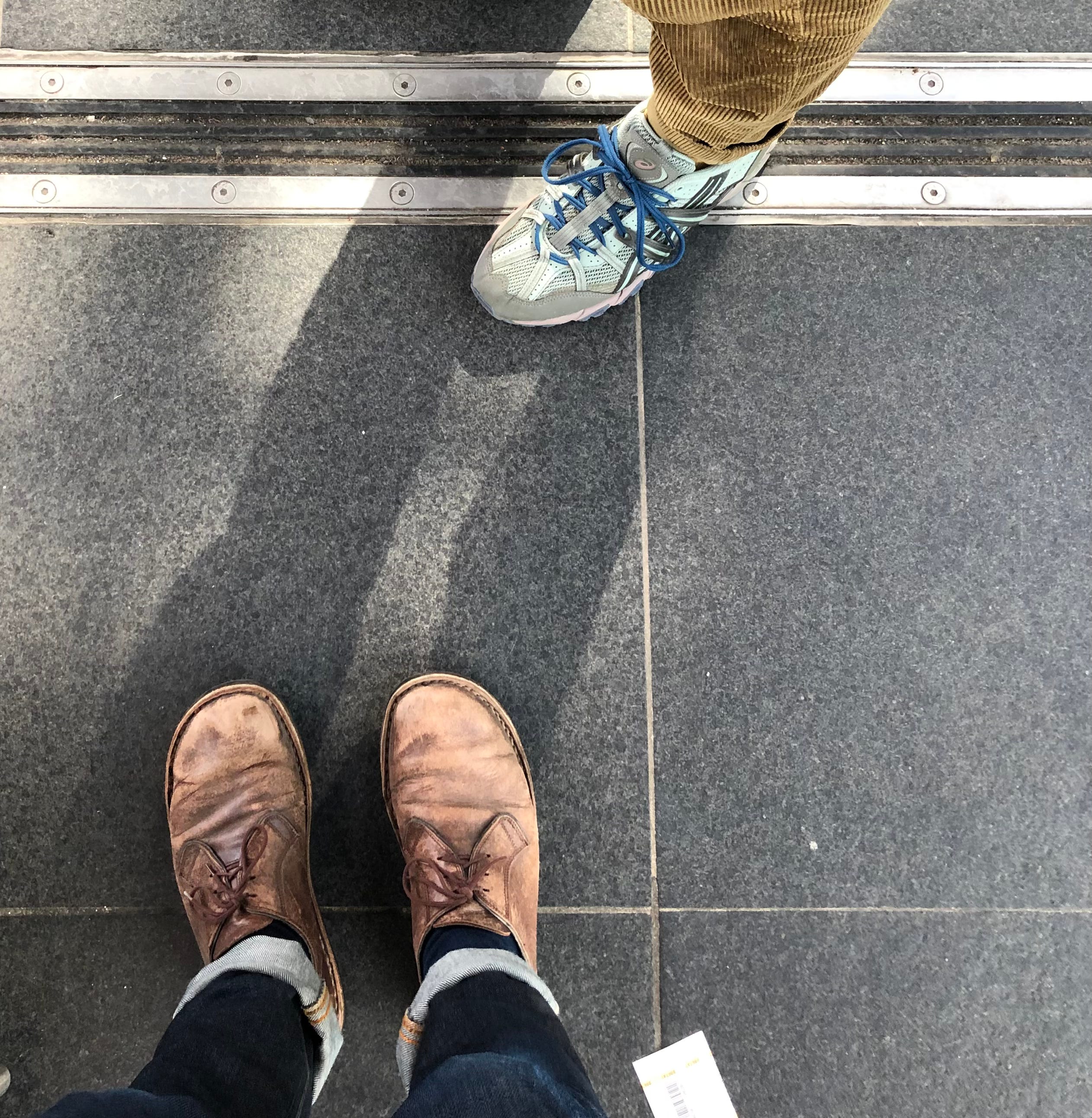
The French writer was the same as ever; the same appearance, the same voice, the same age, the same kind of clothes. He hadn’t eaten breakfast yet, so ordered a croissant despite the fact that he was in the country adjacent to his and the croissant’s homeland. The croissant was small and deflated, a sad satellite of his cultural patrimony. But he remained cheerful, spoke of many interesting topics, and navigated us to the bus station with deft calmness.
The Order of the Track Brothers of St. Andrzej’s train pioneered the use of a longer-than-usual ‘liturgical carriage’, with choir stalls running along either side of a central aisle, and an alter at one end. This was, in fact, two carriages connected together by a rubber concertina.
Here on the long distance bus the atmosphere is very calm. Everyone is sitting silently, looking at their phones, and bright sunlight is streaming in from between huge dramatic clouds.
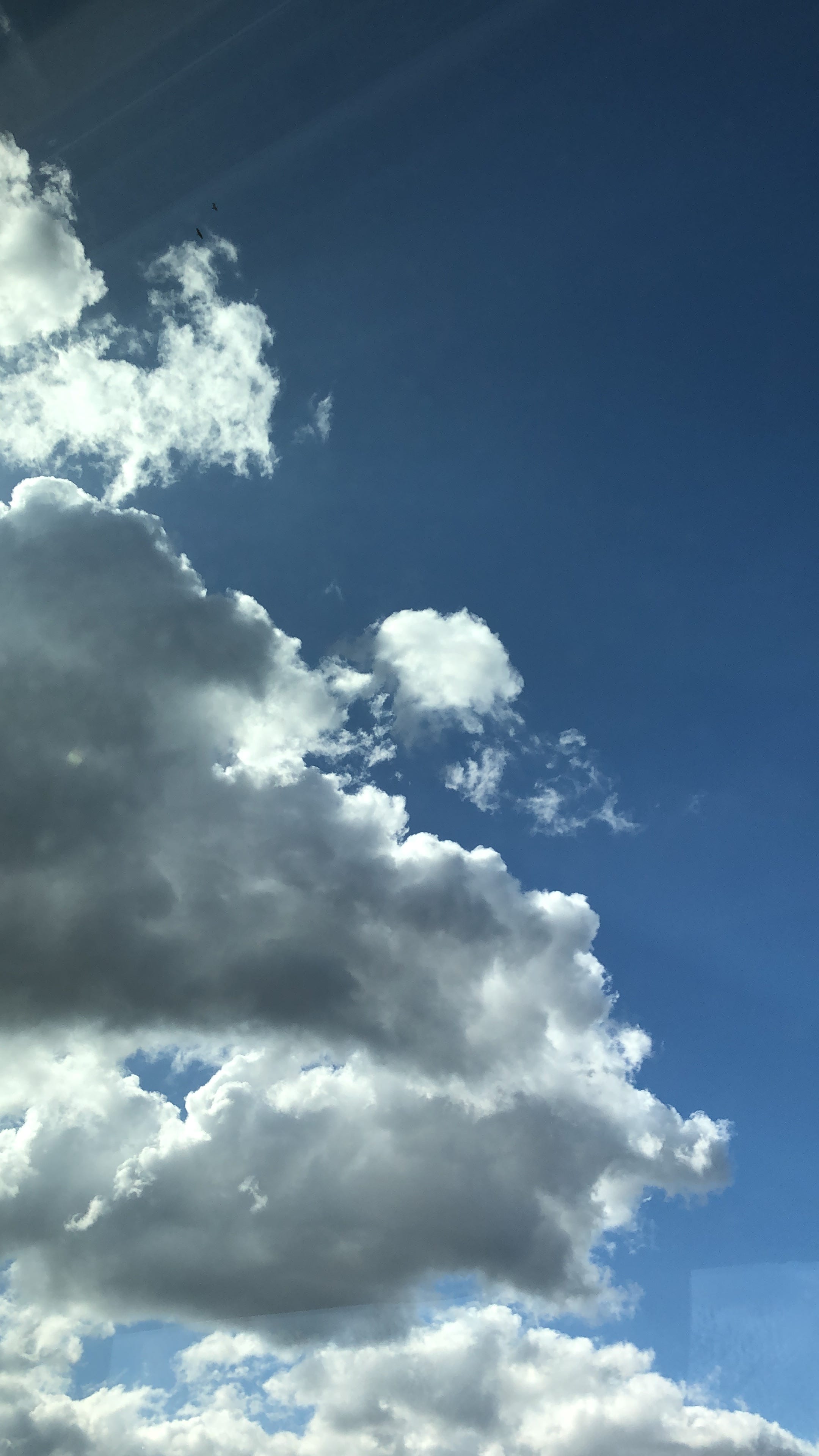
A few more passengers joined the bus at Schönefeld airport. Some racing cyclists seemed to be using the airport’s long and smooth roads for training purposes. Even the passage of vehicles on the motorway is tranquil. There are forests of gangly, insouciant poplar trees on either side, like bored teenagers at a fairground. Various kinds of vehicles wish to cross the Oder, both private vehicles and freight from many lands. Some of the freight is solid, some is liquid and some is gas. A large number of horses are being transported, as are several boats, and many, many cars. There are caravans and motor-homes (whose freight is leisure itself), and sometimes other long-distance buses. A few vehicles display the griffin symbol of Pomerania. One large and camouflaged articulated lorry, travelling east, bears the Red Cross symbol. The forests have immensely long and straight dirt paths marked by horses’ hooves. Every twenty or so kilometres there is rest stop for conflagrations of lorries. There are occasional signs reminding drivers not to drive after having smoked marijuana. On some of the lorries there is very literal text, such as ‘European Containers’, and on some there are messages that search for deeper meaning, such as ‘The Culture of Logistics’.
To be away from home is to be taken out of one’s ‘real life’, while at the same time being plunged into ‘the real world’. When extremely tired, perhaps a little sick, and following a period of being overwhelmed by ‘real life’, these different conceptions of ‘reality’ are difficult to reconcile. Europe is complicated. Borders are complicated, both open and closed borders. Boundaries are complicated.
The Order of St. Vitus’ Rails funded the building of Bahnhofsklöster, large buildings that went right up to the side of railway tracks and had platforms. These buildings had gardens tended to by lay people, often people who were effectively enslaved by the brothers. The Order’s train could pull up to a Gleißportal and the entire side of certain carriages (Schwellenwagen) could be opened using a system of pleated sliding walls. When a Gleißportal conjoined with a Schwellenwagen a large hall was created and tables were laid out. The brothers would sit down to eat a feast prepared for them using the fruits of the gardens.
At the border the bus pulled over in a semi-wasteland of car repair yards and small plots of wasteland. An incredibly beautiful young Polish soldier came aboard, with an old overweight German policeman following her nervously. They inspected everyone’s passports with polite efficiency, except in the case of an elderly Romanian man who had to show additional residency papers - his passport alone did not suffice. Once these checks had been made the bus continued past an Amazon depot larger than a medieval castle into a zone of garden centres, including a huge shop specialising in garden playhouses, prefabricated treehouses and, especially, garden slides. The Polish artist later explained that many German people enjoyed a tradition of crossing the Polish border to buy things for the refurbishment of their German gardens. Next to this was another colossal hilltop fort, this time flying the flag of Decathlon. In a nod to its northern French heritage the Decathlon citadel resembled a Norman castle.
At the city art gallery the Polish artist speaks, giving a guided tour of her exhibition - she tells its stories. When she has finished the Belgian writer and the Polish interpreter take their seats and we begin speaking, with an alphabetical sequence of words appearing on the screen behind us.
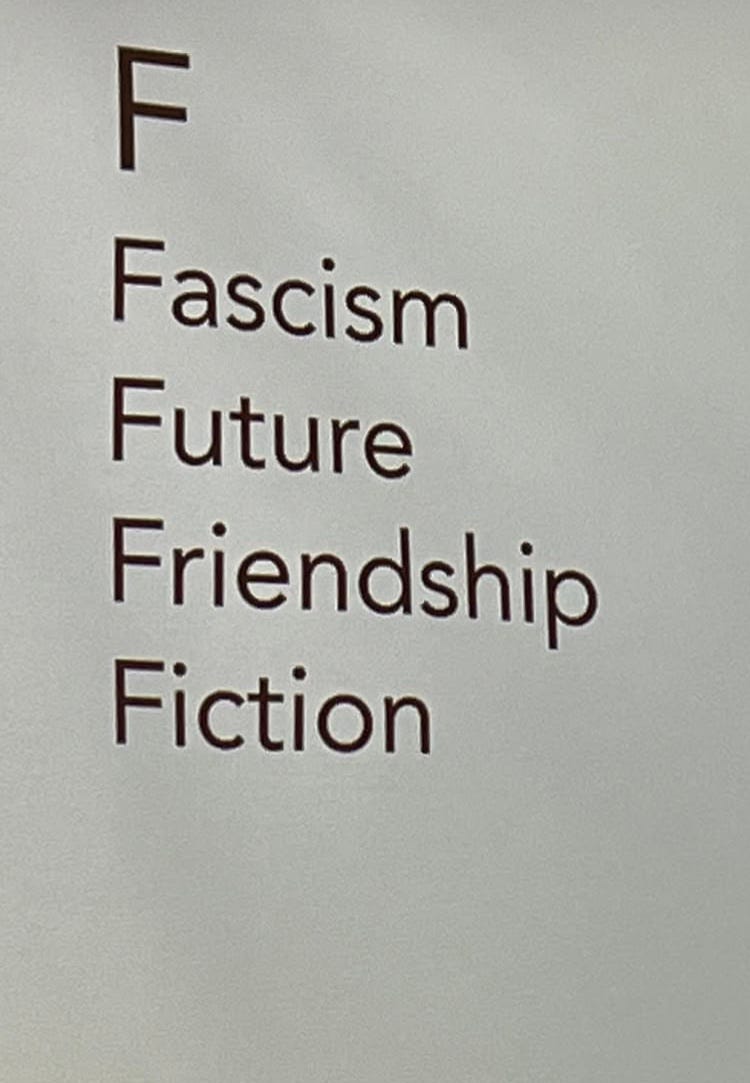
The words are accompanied by pictures, mostly by us but some by others (Sol LeWitt’s photographs of clouds, Martin Kippenberger’s drawings made on hotel stationary, etc). After each line of the script is spoken by one of us, the Polish interpreter renders what we have said in a Polish that sounds neutral, gently passionate, calm and emotional all at the same time. He said afterwards that he enjoyed it. Others said that they found his words very moving. He told us that he was unusually well-prepared, having received the script in advance; he often has to interpret all kinds of cultural events with no preparation whatsoever: poetry readings, operas, experimental improvised theatre, hip-hop interpretations of Shakespeare, shambling artist’s talks by drunken old men, discussions with shy old authors still traumatised by decades of state censorship, readings by impenetrable elderly historians. Several people said they found the evening ‘touching’, ‘inspiring’ and even ‘funny’. The Polish interpreter’s demeanour throughout was one of total calm, and sensitive verbal diplomacy. There was only one word, towards the end, that seemed to ruffle him: ‘squiggles’. He hesitated slightly, smiled to himself, and simply said the word ‘squiggles’ in English, with audible quote marks.
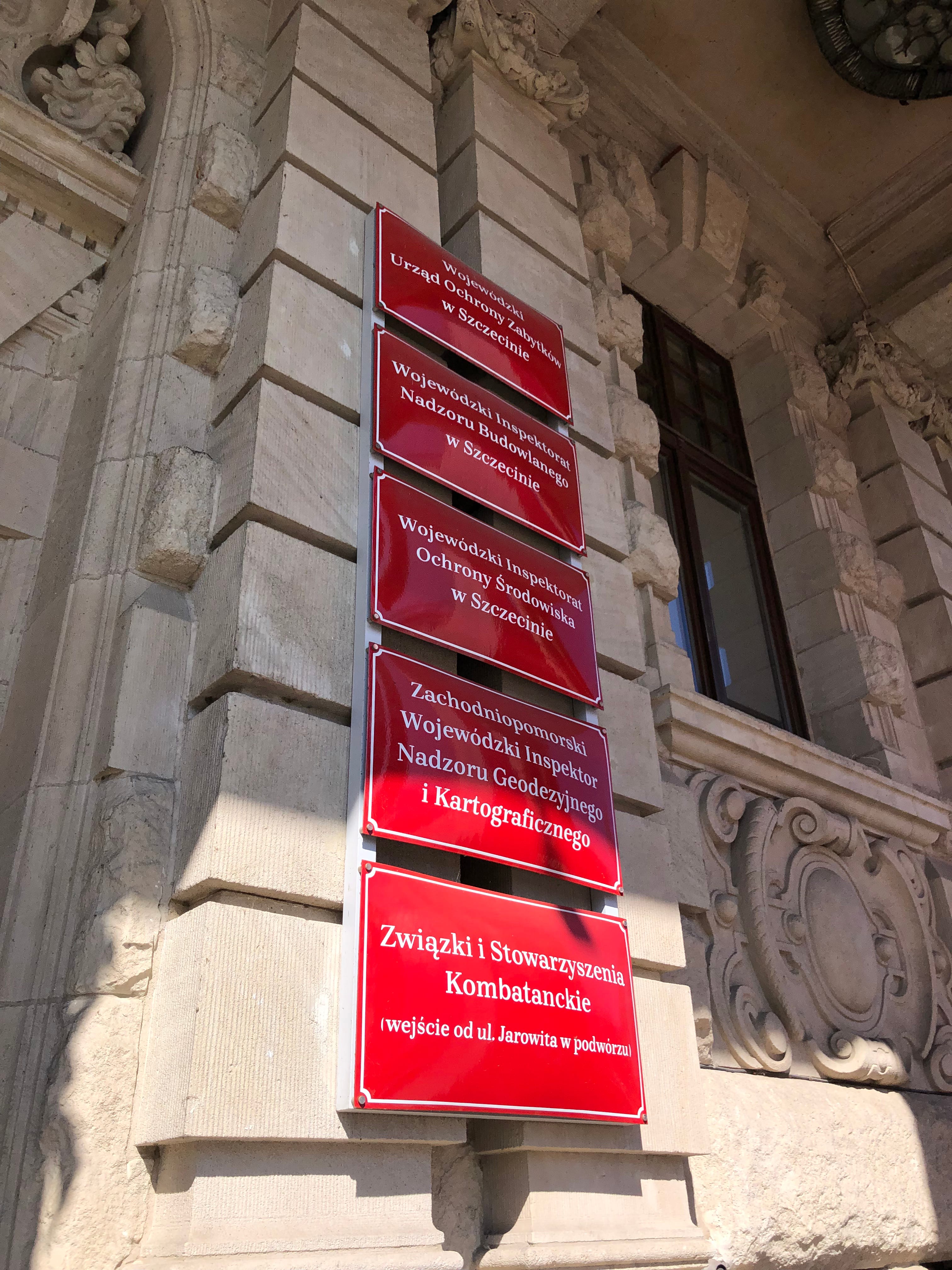
Back across the border, here in the tunnels beneath Berlin, everything is normal, and is shockingly alive after the barely populated streets of the city in the north, with its vast, vast buildings, buildings bigger than in cities with much larger populations. There were Prussian buildings, nazi buildings, ruined buildings, catholic buildings, civic buildings, glass buildings, all gigantic and mostly built of tiny bricks. In the baffled aftermath of 1945 the city’s ruins were harvested for bricks to rebuild Warsaw, but then it slowly became Polish. A new kind of eagle, red and white, replaced the previous ones. The information panels outside the regional assembly building, bigger than most countries’ national parliaments, are exquisitely designed; like Broodthaers vacuum reliefs.
But here where the Wall used to be there are stone buildings too, many of which are covered in graffiti in spite of the refined and genteel bohemian lives conducted within them after decades of gentrification. At the central train station a train from Bohemia itself passes by. The train is painted a sobre navy blue, and its final carriage is an elegant restaurant car, each table covered in a perfectly smooth white tablecloth. Franz Kafka was sitting at a table by himself, nervously scribbling in a notebook in a state of panic, and at another table Bohumil Hrabel was regaling a group of women with anecdotes about the time he spent an entire winter working as a waiter aboard the private train belonging to the Margate of Moravia. He imitated the way the Margate used to imitate the way the Duke of Bohemia used to imitate the Moravian eagle, to cackling howls of laughter. A travelling type salesman entered the restaurant car, his long coat almost too heavy to walk in due to the the samples of lead type hanging from its lining, with examples of every letter of every European alphabet, serif and sans. From the age of fifteen, apprentices to the Guild of Type Sellers must train themselves to be able to walk around wearing coats containing type samples weighing at least their own body weight. Each apprentice is assigned a typeface by their master, who is responsible for pinning the letters to the lining of their coat, roman on the wearer’s left, italics on their right. Once weighed down, the apprentice is sent to walk the streets of Prague each morning, chanting the Song of Garamond as they go. By the age of twenty-one the strongest apprentices may become salesmen themselves. The train continued on - it was going north all the way to Rostock, where it will roll onto a rail ship bound for Saint Petersburg, from whence it would continue its journey onto Karachi.
Here in the night train the compartment is completely empty, although there are indications that it will be filled in a few hours, when the train reaches Hamburg.
The Swedish government agency known as Trafikverket have a large underground room where the entire Swedish train network is accurately replicated using Brio wooden train tracks. The Danish government department known as Transportministeriet have a large underground room where the entire Danish train network is accurately replicated using Lego train tracks, and another (larger) room where the rail network is accurately replicated using Duplo train tracks. The British government’s ‘Department of Transport’ had a large underground room where the entire British train network was accurately replicated using Hornby model train tracks, but since successive waves of privatisation the tracks were moved to a complex of allotment sheds in Sydenham, and the network is now maintained by hobbyists.
Two British men, two Swedish men and one Belgian man have entered the train compartment. They all want to chat (except for the Belgian man, who clearly doesn’t); to ask each other about their previous experiences (if any) of using either this or other night trains, about each other’s reasons for making this particular journey, about each other’s jobs and families, and about everyone’s reasons for being in Germany. One of the Englishmen has been living in Stockholm for a year, and works for an organisation that awards prizes for good corporate environmental practices. One of the Swedes works for the Hitachi corporation and has a teenage daughter who participates in hobby-horse showjumping competitions. The other Englishman is travelling to the Norwegian border region to ski, has a daughter who represents the University of Glasgow in women’s rugby, and comes from Nottingham but now lives in Wales. The other Swede is a school teacher leading a residential exchange trip for his teenage business studies students (he has thirty comically tall eighteen-year old boys with him, some of whom are almost twice the length of the sleeping compartment beds). He has taken them to Frankfurt, Wolfsburg and various places in the Ruhr region, encouraging them to think critically about ideas such as greenwashing and the inheritance of Nazi industrial concerns. But he said the students just wanted to look on their phones, and that the girls in the German school they were conducting the exchange with were mainly interested in how tall the Swedish boys were. The teacher looked like Wes Anderson, and like Anderson wore a corduroy suit. He said he had six children of his own, aged 0, 2, 4, 6, 8 and 10, has a minibus to transport them around (on camping trips for example), grows his own vegetables, has built a pizza oven in his garden, is a beekeeper, plays in a football team, and that when he needs to be alone for a moment goes kayaking in the lake at the end of his garden. The Belgian man gave nothing away. He kept his cards close to his chest, until the following morning when he revealed that he was anxious about missing his connecting train to Norway. The train was running over an hour late, and getting later.
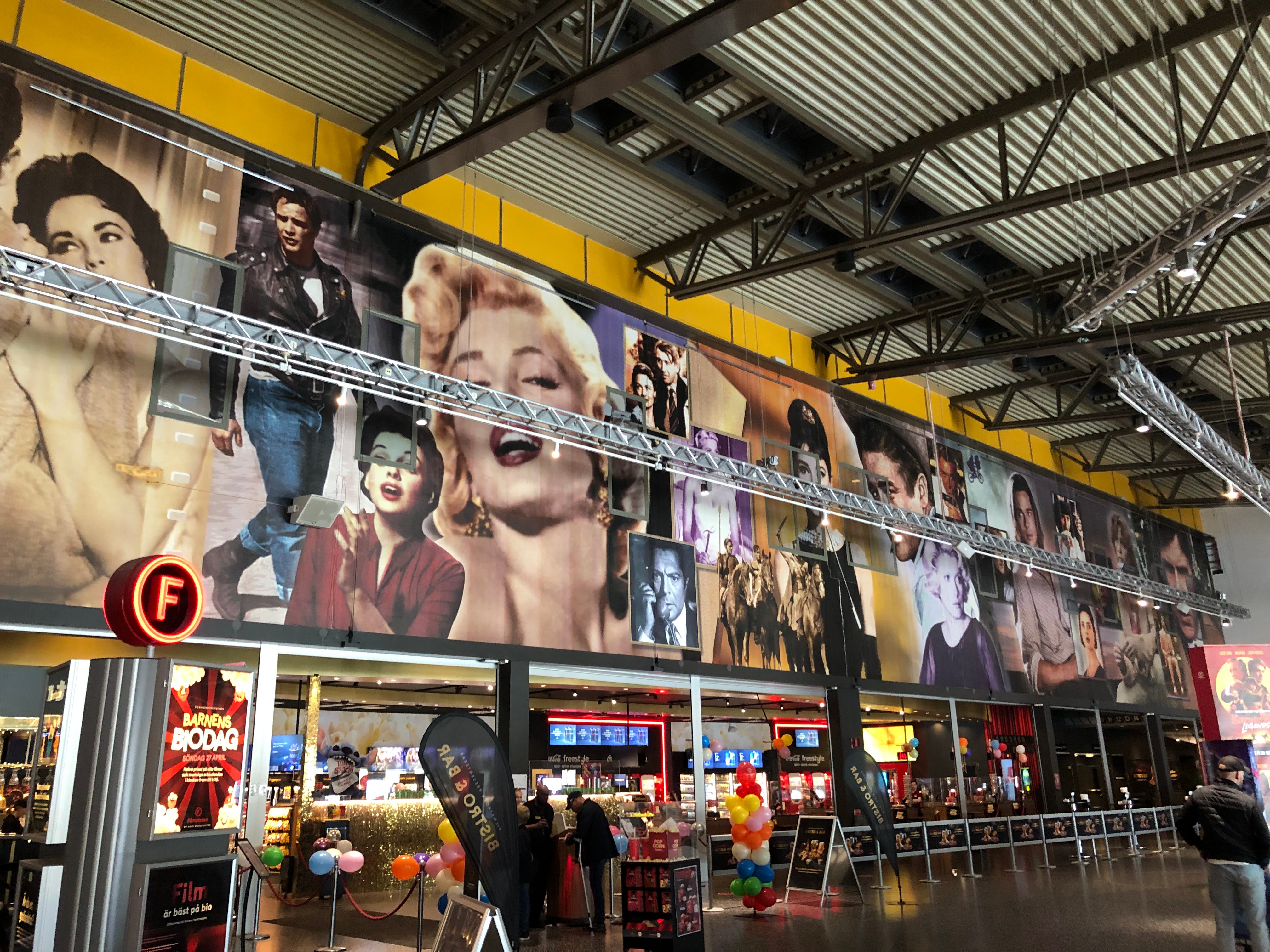
Here in the trampoline park cafe, in a shopping centre located in a zone of multiple shopping centres, each more gigantic than the last, the other fathers want to talk about how tired they are - either because of going the night before, or because of the other children’s birthday parties they have been attending or hosting. There is a multiplex cinema here too, with a banner that is perhaps thirty metres wide showing all the major film stars: Marlene Dietrich, Brad Pitt, Isabella Rossellini, Harrison Ford, James Dean, Sean Connery, Marilyn Monroe, Tom Hanks, E.T. (the extraterrestrial), and Uma Thurman. None of these stars appear in any of the films on show in any of the cinema’s multiple screens.
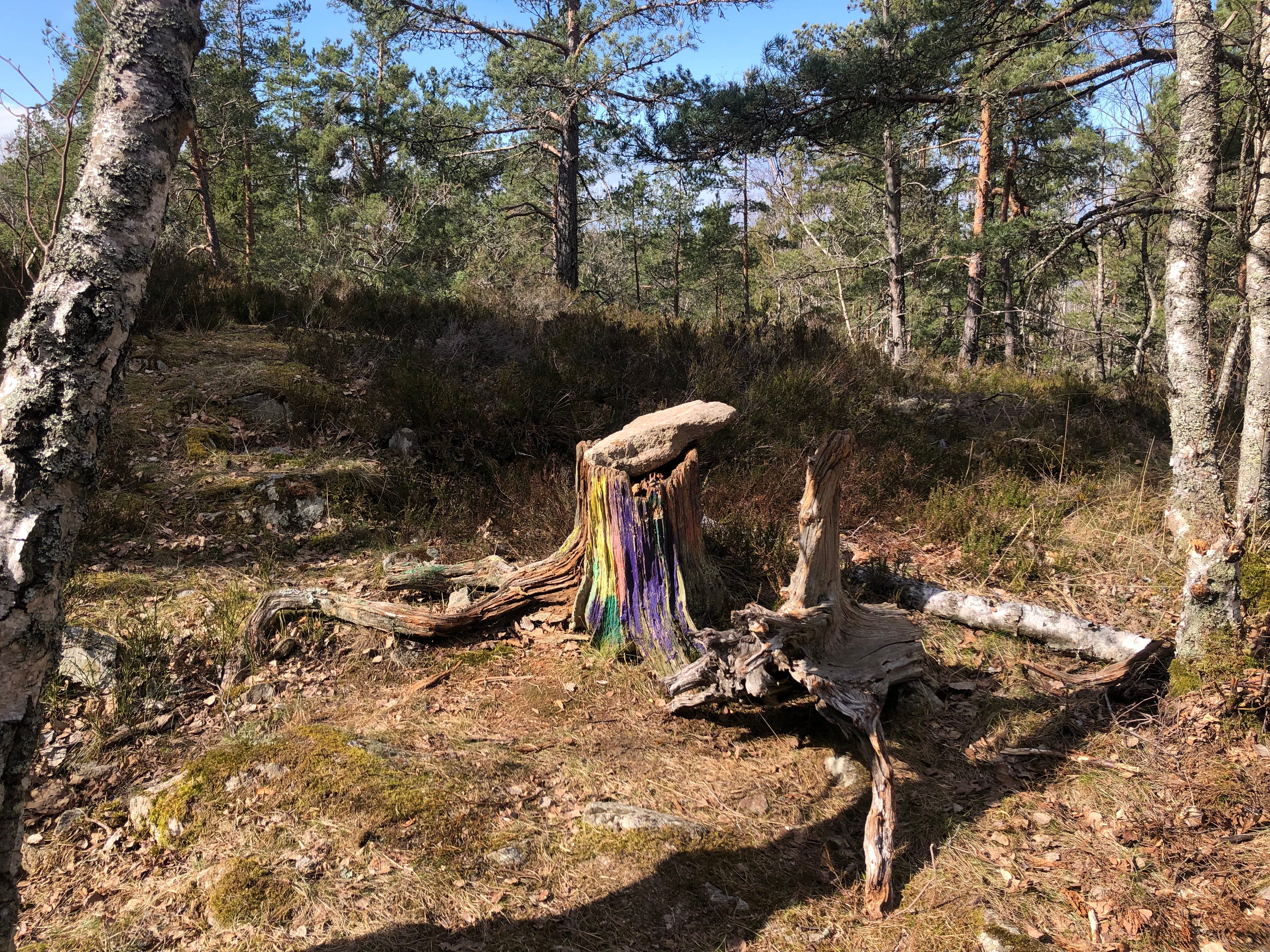
Here in the living room a new rail network has been built to service a large airport. The dogs (or ‘pups’) of the Paw Patrol are on hand to provide assistance. Next to the television there is the sleeve of a record with Edward Elgar on one side and Ralph Vaughn Williams on the other. The younger boy is sitting on the sofa, fluorescent green snot emerging from his nose. Two cats are howling somewhere outside. Earlier on, in a failed attempt to get him to nap in his pram, we walked along a woodland path and encountered a tree stump painted in now-faded rainbow stripes.
Early work, recent work, collected works, late works. Early influences. Late style.
The younger boy is running around the living room. He is spending the week oscillating between illness and hyperactivity. A video is playing on the television showing the strangest dreams dreamt by a member of the Paw Patrol.
His older brother is eating grapes and conducting managerial transactions in a football game on his iPad. Is it worth buying Mario Balotelli? Can Ousmane Dembélé keep scoring at the same rate? Can John Stones be played out of position, as a holding midfielder?
Fever. Aix-La-Chapelle. Aachen. Aching. Ageing. Page five. Page five hundred and fifty. Geography homework. Bouncy balls. Spring. Deflated balloons. Soup. Football training. Unreplied-to emails. Felt-tip pens. Maps. Flora and fauna. Why do so many people title their books, exhibitions and paintings Flora and Fauna? Pepper grinder. Tulips. Birthdays. Food mixer. Candles.
The younger boy is sleeping in his pram. The older boy is at school. Their mother is at work. The Tellkamp book is finished. The sun is shining. But it is cold. Some elderly neighbours just walked past, on their way to the communal recycling bins. One has just suffered a stroke, and suddenly seems much older. His wife pointed out how beautiful the initial stages of the magnolia blossom are. A woodpecker can be heard, although it isn’t clear which tree it’s pecking at. The gravel has been swept from the roads, pavements and bike paths, so winter is believed to be over (on an institutional level at least).
It’s quite surprising in the Phaedo when Socrates’ wife and child are briefly present; strange to think of him being a father. It’s also strange to think of the Deleuze depicted in the Abécédaire as a father, almost comical. How would you change nappies with such long fingernails? His daughter Emilie’s film Peau Neuve is about a video game tester who abruptly leaves his family to learn how to drive heavy industrial machinery. The field of scholarship regarding Deleuze and video games is smaller than one might think, but there is a 2012 essay by ‘Colin’ Cremin (before she became Ciara Cremin and refocused her work somewhat towards ideas of gender and capitalism) about Deleuze and Super Mario Galaxy. Cremin suggests how any game, but perhaps especially Super Mario Galaxy, relies upon the rich and porous intermediary state existing between the ‘time-image’ and ‘movement-image’ that Deleuze describes in his works on cinema: the ‘friction-image’. The interaction between player and image takes place in this friction.
These texts are nothing but friction-images. Fatherhood and parenthood more generally are nothing but sites of friction-image. Unsuccessful creative acts are friction-images par excellence. Accumulations of domestic mess are friction-images, as are attempts to clean or tidy.
The younger boy is on the sofa, watching a video of clips from Hey Duggee that show the program’s fictional children (they are called ‘the squirrels’, and while they are animals none are squirrels) producing artworks. He is no longer sick, and has far, far too much energy to be at home. His older brother is in the bedroom, watching videos about unusual football shirt designs. He is now sick, the victim of suspected food poisoning caused by unhygienic pick’n’mix sweets. Next to the television there is the sleeve for a recording of Mozart’s violin concertos; absurd exercises in showing off, but with moments of sombre beauty. The record sleeve is leaning against an old Nintendo Wii, which contains latent within it an unfinished game of Super Mario Galaxy. The game was left paused a few months after the birth of the younger boy. The intricacies of the controls in some of the later levels (when Mario finally accesses ‘The Garden’, a kind of surreal heaven) were impossible when cradling him (the boy, not Mario) in one arm. Many, many ambitions have gone unrealised during the almost three years that have gone by since then, but primary amongst them was the ambition to finish Super Mario Galaxy and buy a copy of Super Mario Galaxy 2. There is no scholarly work available about Super Mario Galaxy 2 and Deleuze.
Here in the studio things are the same as they were before, before entering the rail network, before speaking about alphabetised ideas in front of an audience, before briefly seeing a few friends, and before being disconcertingly taken seriously for almost a week. Things are the same here, but they are also inexplicable and strange. What kind of strange society would leave remains such as these? A piece of paper had been folded askew, then taped to the window to become discoloured by the sunlight as winter turned to spring.
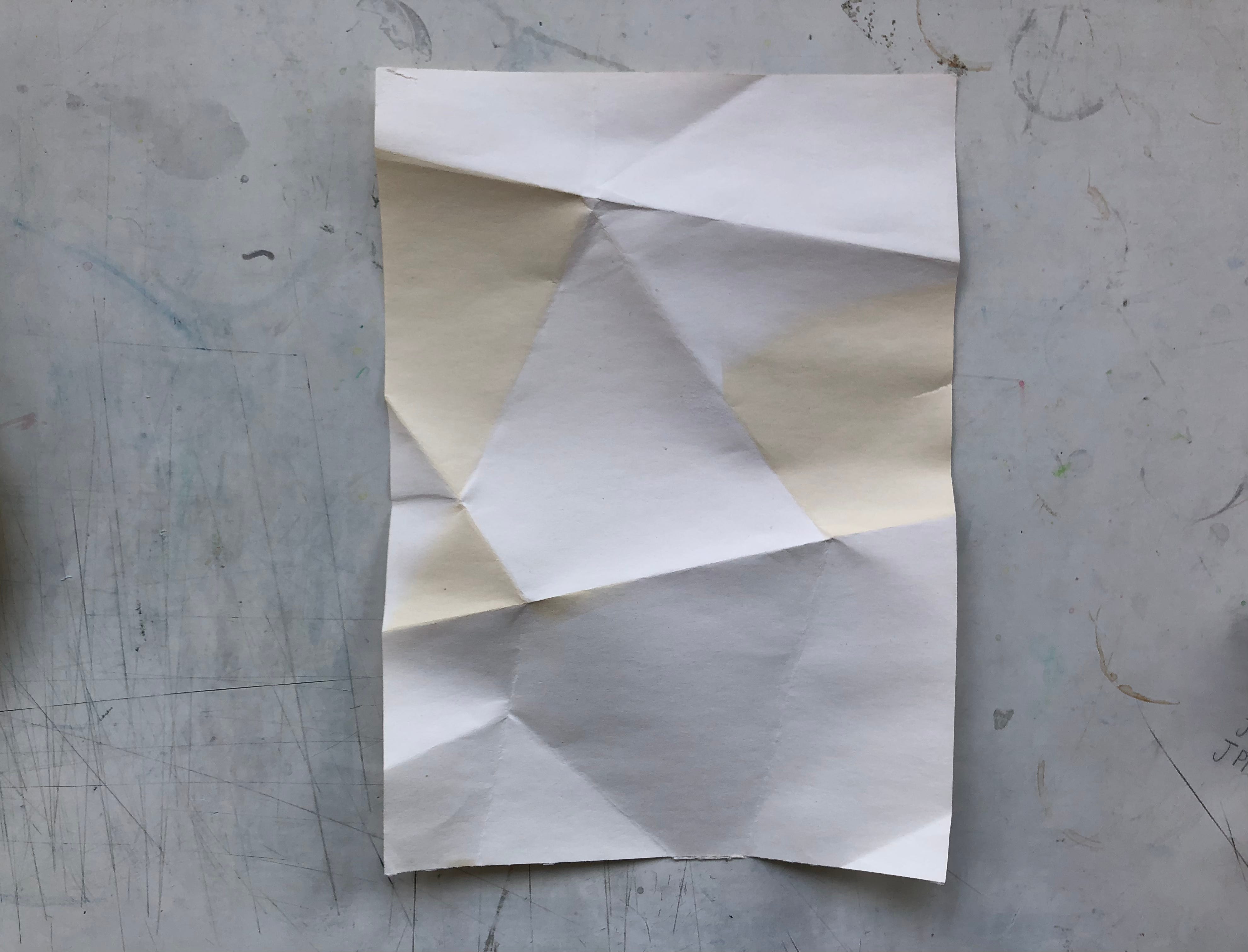
The paper is at least forty years old, and was found in the drawer of a writing table, which is by another window, in a summer house on a small island. The children for whom the paper had been provided are now adults, and have children themselves. The paper now resembles an artwork.
There is also a piece of card covered in little fields of gouache intensities. This resembles an artwork too.

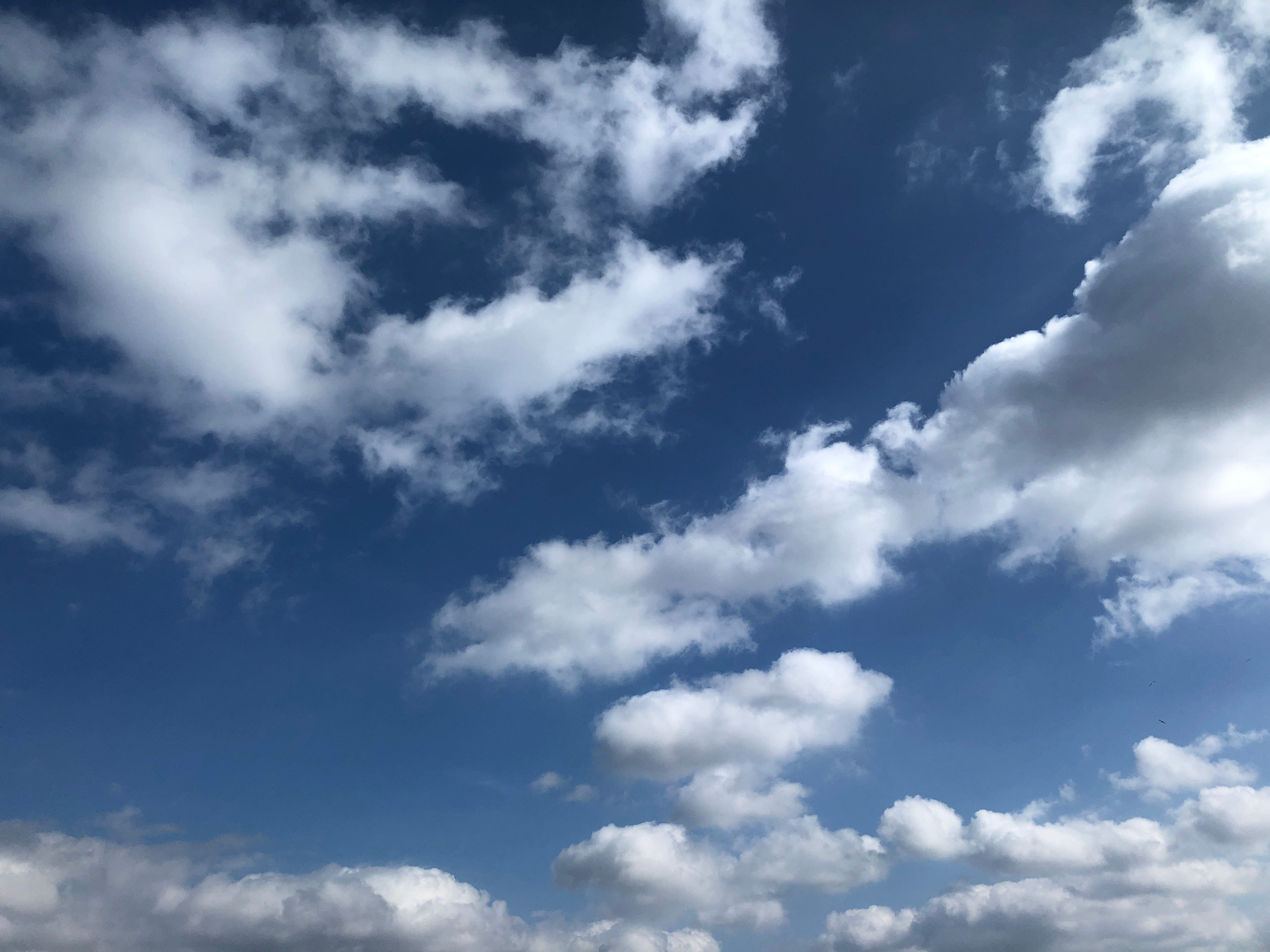
So do the clouds in the sky, of course.
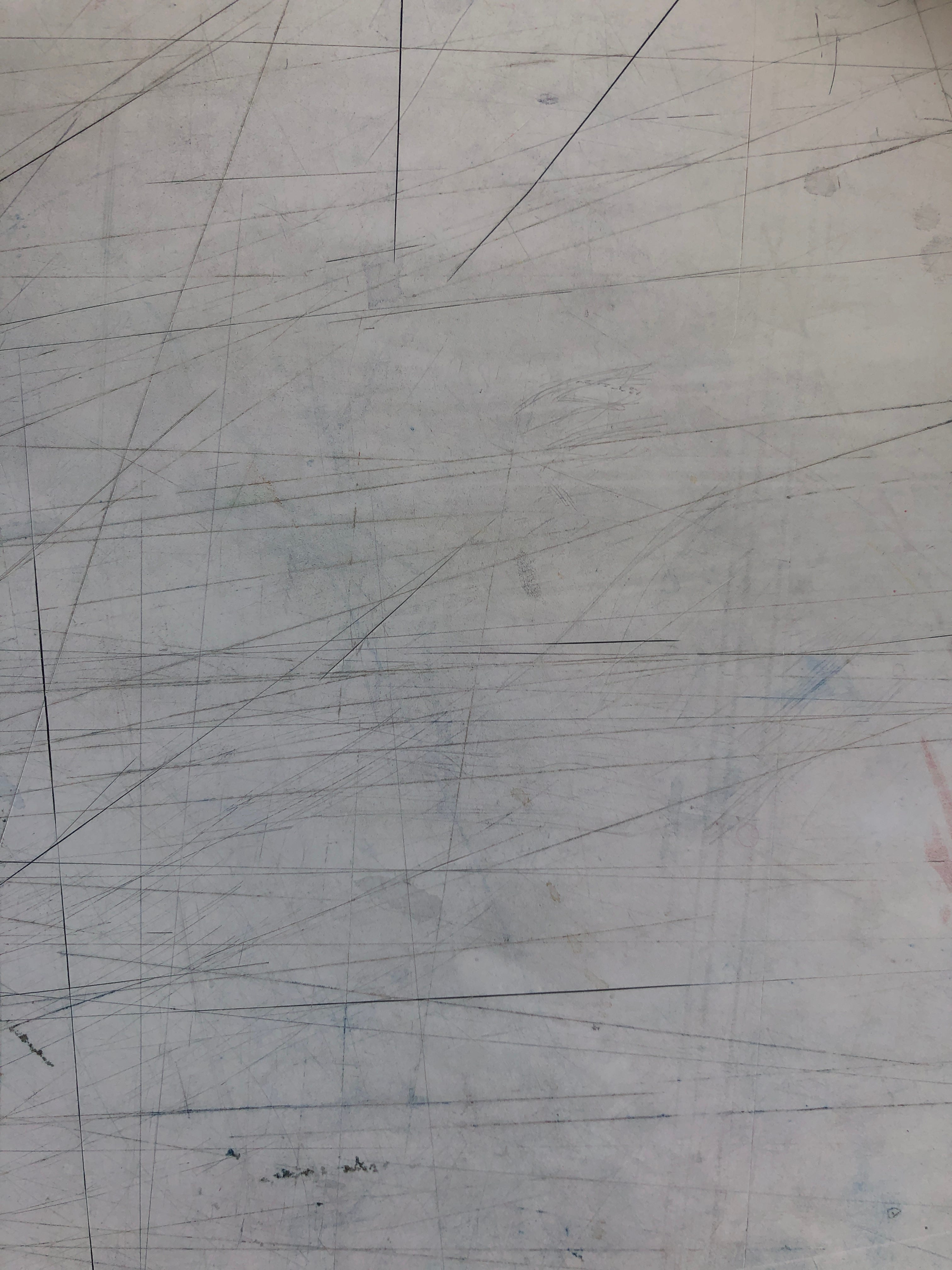
And, more austerely, the knife marks in the drawing table where paper and card have been cut to size.
The larger boy and his mother are both sick. At first it was just him, and the food poisoning theory prevailed. But the illness appears to be contagious. Time enters a state of great disorder, a delirium of mess, physical discomfort and desperate domestic labour.
The train network has vanished, as if it was never there. It has been decommissioned. The living room floor is covered in cars instead, as well as one helicopter and a tricycle.